

First-Party vs. Third-Party Cookies: What You Need to Know
You’ve probably clicked “Accept Cookies” hundreds of times without thinking twice. But what are you actually agreeing to? And why does it matter?
Let’s cut through the mumbo jumbo and explain what’s really going on.
What Are Cookies, Anyway?
Cookies are tiny text files that websites store on your device. Think of them as sticky notes that help websites remember things about you: your login info, your language preference, or what’s sitting in your shopping cart.
They’re not inherently good or bad. They’re tools. But how they’re used makes all the difference.
The Two Types That Matter
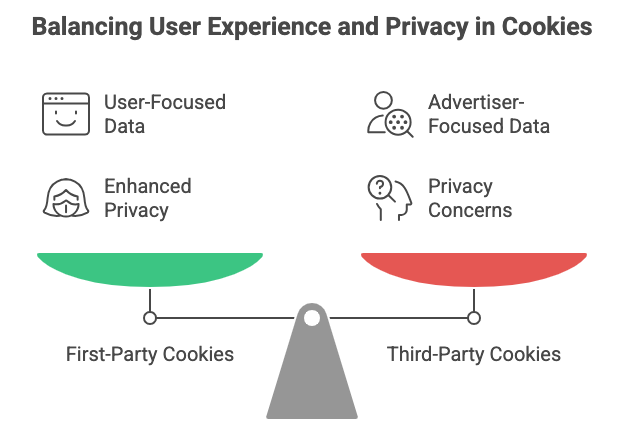
First-Party Cookies: The Helpful Ones
First-party cookies come directly from the website you’re visiting. When you log into your bank account and it remembers you next time? That’s a first-party cookie. When an online store keeps your cart intact after you accidentally close the tab? Same thing.
What they do:
- Remember your login credentials
- Save your preferences (language, dark mode, etc.)
- Keep items in your shopping cart
- Track basic site analytics
These cookies only work on the site that created them. Your favorite news site can’t see what you bought on Amazon. That limitation is exactly what makes them relatively safe and uncontroversial.
Third-Party Cookies: The Controversial Ones
Third-party cookies are created by domains other than the one you’re visiting. They’re the reason you search for running shoes once and then see ads for sneakers everywhere for the next two weeks.
When you visit a website with embedded ads or social media buttons, those external services can drop cookies on your browser. As you move around the web, those same services recognize you and build a profile of your interests.
What they do:
- Track your browsing across multiple websites
- Enable targeted advertising
- Power retargeting campaigns (those “following” ads)
- Allow social media sharing features
This is where privacy gets complicated.
Why Third-Party Cookies Became a Problem
The technology itself isn’t malicious, but its widespread use raised serious concerns:
For users: Most people had no idea they were being tracked across the internet. The data collection happened invisibly, creating detailed profiles of browsing habits, interests, and behaviors.
For regulators: Laws such as the GDPR in Europe and the CCPA in California now require explicit consent for this kind of tracking. The old model of “track first, ask questions never” became legally problematic.
Learn more: What data can you send when consent is denied
For browsers: Safari and Firefox already block third-party cookies by default. This fragmented the tracking landscape and raised questions about the technology’s future.
The Plot Twist: Google’s Reversal
Here’s where things get interesting.
For years, Google planned to phase out third-party cookies in Chrome. This browser is used by roughly 65% of internet users. The deadline kept getting pushed back: 2022 became 2023, then 2024, then early 2025.
Then, in April 2025, Google announced they weren’t doing it at all.
Instead of eliminating third-party cookies, Chrome now lets users manage their preferences through existing privacy settings. The cookies stay, but users who care enough to dig into settings can block them.
Why the reversal?
- Google’s replacement technology (Privacy Sandbox) couldn’t fully replicate what cookies do
- Advertisers pushed back hard. The industry had invested billions in preparing for a change that hasn’t happened
- Regulators worried the alternatives might give Google an unfair competitive advantage
- Technical challenges proved harder than expected
What’s Changing
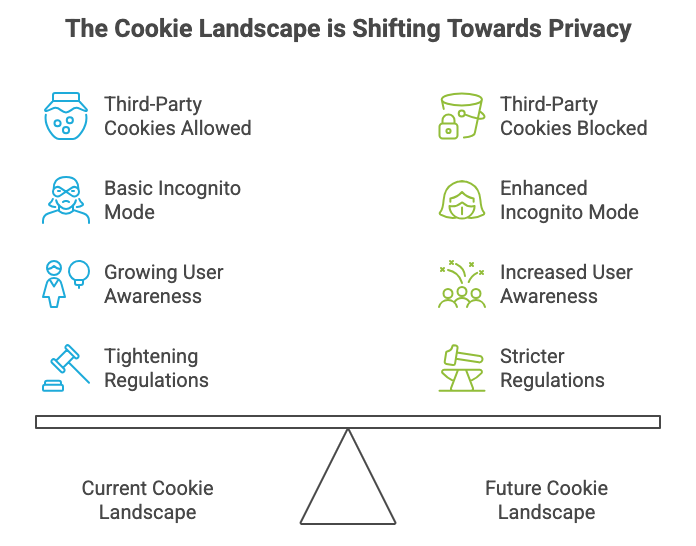
Even with third-party cookies sticking around in Chrome, the broader trend toward privacy isn’t reversing:
Safari and Firefox still block third-party cookies by default. If you use these browsers, you’re already living in a largely cookieless world.
Chrome’s Incognito mode blocks third-party cookies and is getting enhanced privacy features, including IP Protection, rolling out in late 2025.
User awareness is growing. More people are blocking cookies manually, using privacy-focused browsers, or employing ad blockers.
Regulations continue to tighten globally, requiring more transparency and consent.
The practical result? Third-party cookies are becoming less effective and less reliable, even where they’re technically still allowed.
The Emerging Alternatives
As cookies lose ground, several alternatives are gaining traction:
First-party data strategies: Businesses are focusing on data they collect directly from customers with consent. Email addresses, purchase history, stated preferences. This data is more accurate and privacy-compliant.
Contextual advertising: Instead of targeting you, ads target the content you’re viewing. Reading an article about hiking? You might see ads for outdoor gear, not because someone tracked you, but because the content is relevant.
Google’s Privacy Sandbox: Though it’s no longer replacing cookies, tools like the Topics API still exist as privacy-focused options. They group users into broad interest categories (like “Sports” or “Travel”) without individual tracking.
Universal IDs: Industry solutions that create persistent identifiers based on hashed email addresses, allowing cross-platform tracking with user consent.
What This Means for You
As a regular internet user, you have more control than ever. You can:
- Use browsers that block third-party cookies by default (Safari, Firefox, Brave)
- Adjust Chrome’s privacy settings to limit tracking
- Use browser extensions that block trackers
- Actually read those cookie consent banners and make informed choices
As a business, the message is clear: build relationships with your customers that don’t depend on surveillance. First-party data, earned through trust and value exchange, is the sustainable path forward.
The Bottom Line
First-party cookies remain essential for making websites work well. They’re here to stay.
Third-party cookies are in a weird limbo. Technically alive in Chrome, but increasingly ineffective across the broader ecosystem. The “cookiepocalypse” didn’t happen on schedule, but the shift toward privacy is real and ongoing.
The future of the web is moving toward a model where tracking requires more transparency, more consent, and more value exchange. Whether that future arrives through technology, regulation, or user behavior, the direction is clear.
Those cookie banners aren’t going away. But now you know what you’re actually clicking.