


Beyond Binary: The Future of Consent, Payload Adaptation, and Server-Side Tracking
For years, analytics treated consent like a light switch. Either a user agreed, and the tags fired, or they did not, and the user disappeared from reports. It was simple. It also no longer works.
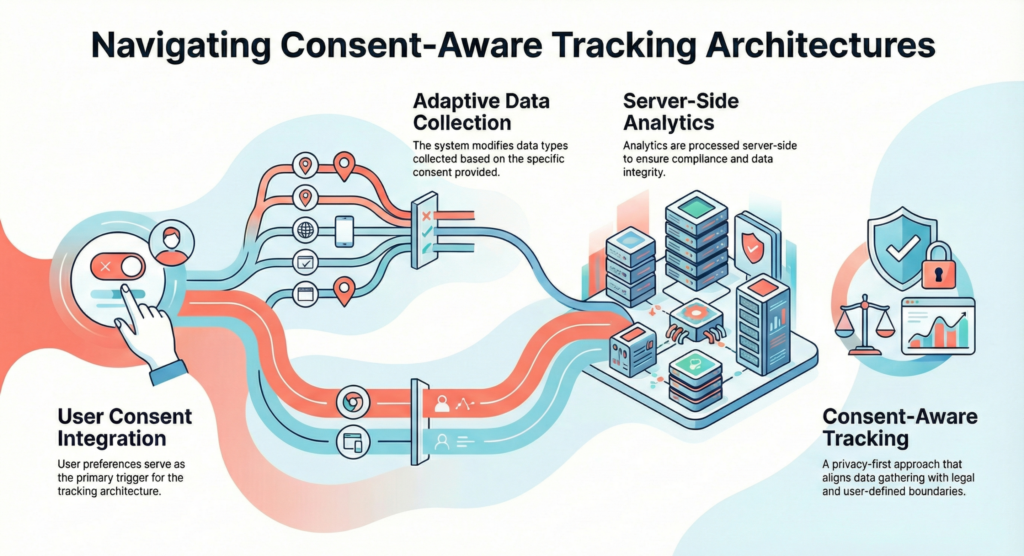
With privacy regulations like GDPR and CCPA tightening and browsers restricting tracking, this all-or-nothing approach creates blind spots in measurement. The industry conversation has shifted. Consent is no longer just a gatekeeper. It is a data contract, a framework for how data is treated rather than a simple yes or no.
The Cost of Blocking Everything
Traditional consent management platforms often block all tags when a user declines cookies. The result is a complete loss of visibility into that user’s journey. Attribution becomes difficult, campaign performance looks lower than it actually is, and website optimization loses its foundation.
Privacy laws focus on personal data and trackers, not necessarily on anonymous, aggregated information. Blocking everything is a blunt solution. A more nuanced approach adapts what is collected to the permissions granted, preserving insight without compromising privacy.
Payload Adaptation: The Dimmer Switch of Modern Tracking
Modern tracking is less like a light switch and more like a dimmer. Payload adaptation allows events to scale up or down depending on consent.
When consent is declined:
-
Identifiers such as user IDs are removed
-
Storage, like cookies or local storage, is disabled
-
Signals are aggregated, sending only non-identifying information such as timestamps, conversion actions, or general location
This approach keeps analytics directionally accurate while respecting user privacy.
Google Consent Mode in Practice
A clear example of this is Google Consent Mode. When consent for ad storage is denied, tags still load but behave differently. Instead of setting cookies, the tag sends a cookieless ping. Google can then model conversions based on the behavior of consenting users, recovering lost insights, and providing a more complete picture of campaign performance.
Consent here is not a gate. It is an input that shapes how data is processed.
Server-Side Tracking: Taking Control
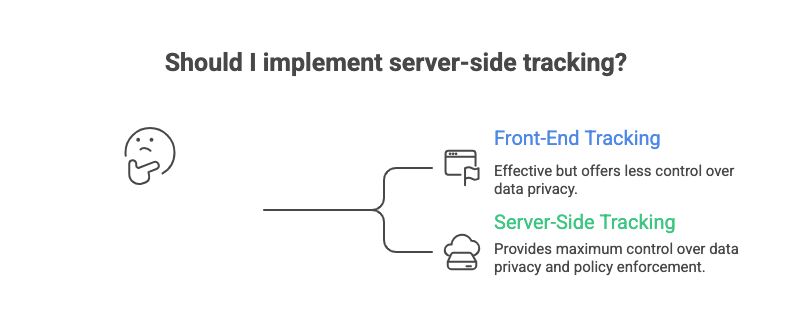
While front-end adaptations like Consent Mode are effective, server-side tracking offers the most control. In a client-side setup, the browser communicates directly with vendors. A server-side setup introduces an intermediary cloud server under full control, which intercepts and adjusts the data before it reaches third-party platforms.
This approach allows privacy policies to become technical rules rather than guidelines.
-
Conditional Forwarding: Events from users who have not consented can skip certain tags while allowing necessary analytics tags to continue
-
Data Redaction: Sensitive parameters can be removed
-
Secure Hashing: Identifiers can be hashed on the server before reaching advertising platforms
Handling PII Responsibly
Accidental collection of personally identifiable information, such as emails or phone numbers in URL parameters, is a common risk. Server-side tracking allows these patterns to be detected and removed before reaching vendors. Even if a front-end implementation is imperfect, the server acts as a safety net, preventing PII from leaking and helping maintain compliance.
The Future of Analytics
Across browsers, platforms, and legislation, a clear pattern is emerging. Observed data is shrinking, modeled and aggregated data is growing.
Success in this environment requires moving away from a binary mindset. Analytics is no longer about collecting less data. It is about collecting data with intention, respecting user choices, and preserving insight.
Combining payload adaptation with server-side tracking creates a data strategy that is resilient, compliant, and meaningful. This is the direction modern tracking is heading, quietly redefining how businesses understand their users.
Related Posts

Why Hire a Conversion Tracking Agency?
Hiring a conversion tracking agency means accurate data, better campaign…


What Data Can You Legally Send When Consent Is Denied?
What data can you send when consent is denied? Full breakdown of cookieless…