


GDPR, CCPA, and US State Privacy Laws: Essential Differences for Marketers
Data privacy has become a defining concern for marketers. Understanding how regulations like GDPR, CCPA, and emerging US state privacy laws differ is essential for running compliant campaigns. These laws aren’t just legal requirements—they shape how marketers collect, store, and use consumer data. Staying informed lets you design marketing strategies that respect privacy while keeping audiences engaged.
Understanding GDPR
The General Data Protection Regulation (GDPR) governs how companies handle personal data in the European Union. Introduced in 2018, it gives individuals greater control over their information. Key principles include lawful processing, transparency, data minimization, accuracy, storage limitation, integrity, and confidentiality.
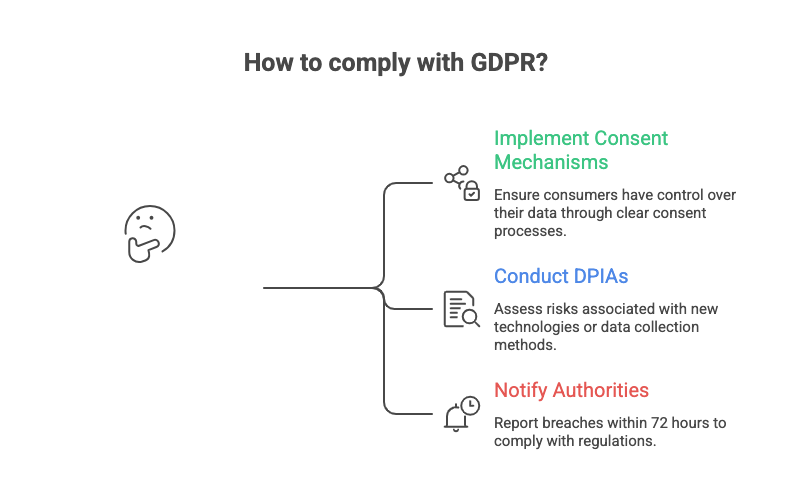
Marketers must implement clear consent mechanisms and allow consumers to easily access, correct, or delete their data. Conducting Data Protection Impact Assessments (DPIAs) is crucial, especially when using new technologies or data collection methods. In case of a breach, GDPR requires notification of authorities and affected individuals within 72 hours.
Exploring CCPA
The California Consumer Privacy Act (CCPA), enacted in 2018, focuses on consumer rights for California residents. It applies to businesses collecting personal data from California residents, especially those with over $25 million in revenue or handling data from 50,000+ consumers annually.
Key consumer rights include:
-
The right to know what data is collected
-
The right to delete personal information
-
The right to opt out of the sale of personal data
For marketers, this means adjusting data collection practices, ensuring transparency, and providing opt-out mechanisms. Compliance is both a challenge and an opportunity to build consumer trust.
New US State Privacy Laws
States like Virginia and Colorado have introduced their own privacy laws, creating a patchwork landscape.
-
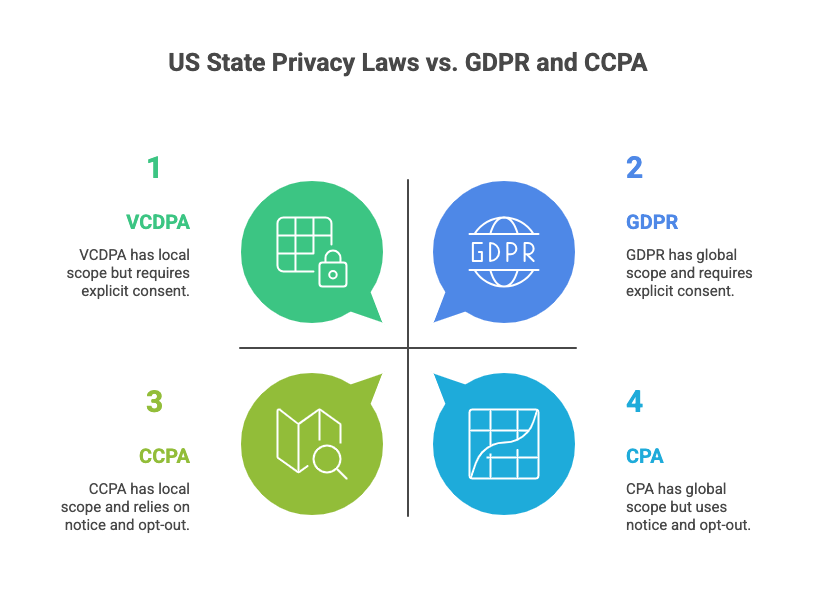
Virginia Consumer Data Protection Act (VCDPA): Effective 2023, gives rights similar to GDPR and CCPA, including access, correction, deletion, and opt-out for targeted advertising.
-
Colorado Privacy Act (CPA): Also effective in 2023, adds a risk-based framework for data processing, offering some flexibility while ensuring consumer rights.
Unlike GDPR, these laws often allow notice and opt-out instead of requiring explicit consent. Understanding these nuances is critical for marketers operating across states.
Key Differences
-
Scope: GDPR applies to any organization handling EU personal data; CCPA focuses on California residents; state laws apply locally.
-
Consumer Rights: GDPR offers extensive rights, including data portability; CCPA emphasizes transparency and opt-out; state laws mix these approaches.
-
Consent: GDPR requires explicit opt-in; CCPA and state laws often rely on notice and opt-out.
-
Enforcement: GDPR fines are steep and managed by EU authorities; CCPA enforcement comes via the California Attorney General; state laws vary.
Implications for Marketers
Compliance isn’t optional. Marketers need to:
-
Conduct thorough data audits
-
Build clear privacy policies
-
Train teams on compliance
-
Communicate transparently with consumers
This not only prevents penalties but also strengthens trust and credibility.
Best Practices
-
Use transparent and understandable privacy policies
-
Implement explicit opt-in and consent management where required
-
Engage consumers in a dialogue about their data preferences
-
Keep internal teams educated on evolving laws
The Future of Privacy Legislation in the US
The US is moving toward more state-specific privacy regulations, with potential federal legislation on the horizon. Marketers must stay adaptable, prioritize transparency, and maintain consent-driven practices. Anticipating regulatory changes will help avoid compliance risks and position brands as trustworthy in consumers’ eyes.
Conclusion
Navigating GDPR, CCPA, and emerging state privacy laws is no longer optional for marketers. These regulations shape how consumer data can be used, and understanding the differences ensures compliance, trust, and long-term brand credibility. Privacy-conscious marketing isn’t just a legal requirement; it’s a strategic advantage.
Related Posts


What Conversion Tracking Methods Are Best for Your Business?
Not sure which conversion tracking method your business needs? Learn what's…

How Ad Blockers Are Destroying Your Analytics
+42% of users block ads, and your GA4 data is paying the price. Learn how ad…